Plateformes data & lakehouse
Industrialise your AI models: from notebook to scalable deployment, with monitoring and governance.
Industrialised AI.
From notebook to production.
Platforms and pipelines that turn your AI experiments into business value. Our approach covers the entire lifecycle of AI models: automated training pipelines, Feature Store and data versioning, Model Registry and deployment, monitoring and drift detection.
How we work
Assess
Audit the MLOps maturity, the models already running and the stack in place. Choose the target and design the platform before building anything on it.
depending on how many models already run in production and how scattered the stack is
- MLOps maturity audit
- Stack selection and platform design
- Prioritised roadmap
Build
Stand up reproducible training pipelines, a feature store and a model registry, then deploy one model and measure the baseline it will be judged against.
depending on the data sources to connect and the hosting constraints
- Reproducible training pipelines
- Feature store and model registry
- One model deployed, baseline measured
Industrialise
Industrialise on a shared foundation: CI/CD for models, drift monitoring and retraining, and the teams brought up to speed on the chain.
depending on the number of models and teams to bring on board
- CI/CD for models, on a shared foundation
- Drift monitoring and retraining
- Team upskilling
Operate
Operate, maintain and optimise. Watch the models and the LLMs, keep inference cost under control, and hold governance as the models and the rules change.
service commitment defined with you
- Model and LLM observability
- FinOps optimisation of inference cost
- Continuous governance and audit
Our Offerings
Build and operate your ML platforms
Complete MLOps platforms on MLflow, Kubeflow or Vertex AI. Automated training pipelines, a centralised Feature Store, a versioned Model Registry and low-latency serving. Your data scientists deploy autonomously and your models stay reproducible.
Deploy and manage your LLMs in production
A dedicated LLM stack: supervised fine-tuning, RAG, security guardrails, prompt management and continuous evaluation. Every model is monitored to detect drift, hallucinations and bias, with automatic retraining.
Industrialise the preparation of your ML data
A centralised Feature Store: feature versioning, online/offline computation, reuse across models and teams. 70% less preparation time and guaranteed consistency between training and inference.
Detect drift before your users do
Complete ML monitoring: data drift, concept drift and performance drift in real time. Calibrated alerts, automatic retraining on thresholds, A/B testing and instant rollback. 90% of drifts detected before impact.
The unified ML pipeline
One thread runs through the six steps below: demand forecasting across a warehouse network. Each panel shows the same pipeline one step further, from the data contract to the drift that triggers retraining.
Data contract
Sources, freshness, ranges and uniqueness are written down before any model exists. What is not guaranteed here will not be guaranteed afterwards, and a broken expectation stops the pipeline rather than warning about it.
pipeline-prevision
- 01-donnees.contract.yaml
- 02-features.py
- 03-entrainement.yaml
- 04-evaluation.py
- 05-deploiement.yaml
- 06-monitoring.yaml
Versioned feature store
One definition, read at training and at inference. That single source is what stops the training feature and the production feature from drifting apart for reasons nobody can trace months later.
pipeline-prevision
- 01-donnees.contract.yaml
- 02-features.py
- 03-entrainement.yaml
- 04-evaluation.py
- 05-deploiement.yaml
- 06-monitoring.yaml
Reproducible training
Reproducible means replayable identically: the data snapshot, the code commit, the parameters and the random seed are frozen together, and every run is logged to the registry with its data fingerprint.
pipeline-prevision
- 01-donnees.contract.yaml
- 02-features.py
- 03-entrainement.yaml
- 04-evaluation.py
- 05-deploiement.yaml
- 06-monitoring.yaml
Gates before the registry
A candidate model is compared with the one in service on a reference dataset, on accuracy, bias per segment and latency. A threshold that is not met stops the chain: it does not produce a warning.
Canary deployment and A/B
A new model does not replace the old one at once. It takes traffic in steps while it behaves better than the control, and rolls back on its own as soon as it stops doing so.
pipeline-prevision
- 01-donnees.contract.yaml
- 02-features.py
- 03-entrainement.yaml
- 04-evaluation.py
- 05-deploiement.yaml
- 06-monitoring.yaml
Drift and retraining
Drift is not a failure, nothing falls over. It is measured against the training snapshot, and crossing the threshold triggers the retraining pipeline rather than an alert somebody has to read.
pipeline-prevision
- 01-donnees.contract.yaml
- 02-features.py
- 03-entrainement.yaml
- 04-evaluation.py
- 05-deploiement.yaml
- 06-monitoring.yaml
Models running in production

A data software factory augmented by GenAI agents
×2 delivery velocity · −50% technical debt
A rising volume of business requests that data delivery could no longer absorb, and a data estate piling up. It called for a structuring semantic model, end-to-end security and governance, and AI agents working alongside the internal teams.
An AI-driven agile methodology: an orchestrator agent coordinates specialised agents across the whole cycle. Shared standards, a semantic model and Row Level Security frame the factory, with skills transfer from the first sprint.

DevOps and DataOps industrialised on Azure
Automated pipelines · Governed cloud platform
Data flows and deployments handled without a shared chain, on an estate where each change had to be replayed by hand and where nothing guaranteed that two environments behaved the same way.
A DevOps and DataOps chain built on Azure: pipelines industrialised, environments described as code, and deployments made reproducible rather than replayed. What used to be a manual operation becomes an execution.
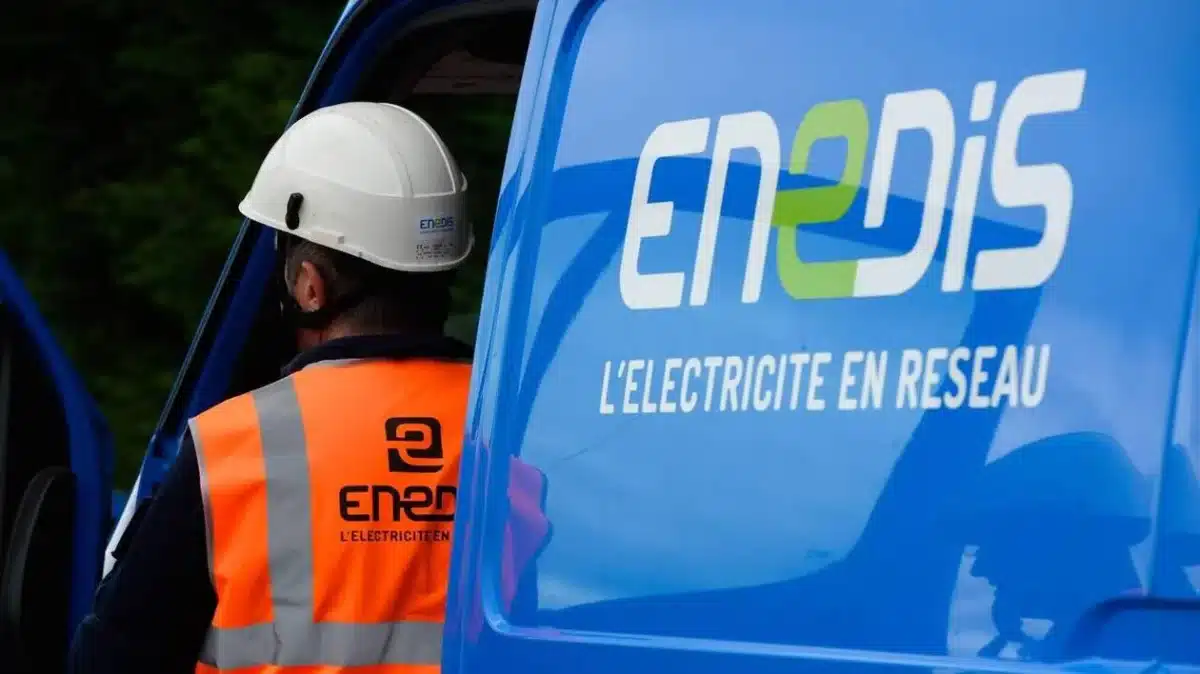
Cinké Évolution : field operations steered by data
Power BI · Field operations planned
Regional teams planning grid and customer field operations without a shared view of the data, each directorate preparing its own schedule from its own extracts.
An agile data visualisation tool that turns the operational data into a single steering view, so scheduling and preparation run on the same figures across the regional directorates.
Insights & Perspectives

MLOps: from experimentation to production at scale
According to Gartner, 85% of ML projects never reach production. The gap is not talent or algorithms, it is everything that sits between a working notebook and a system that holds.

AI Evals for MCP in AIOps
How to set up rigorous evaluations for AI agents using the Model Context Protocol in AIOps environments, and what to measure before trusting one in production.

MLOps: industrialising the model lifecycle
Data pipelines, reproducible training, continuous deployment, drift monitoring and model governance, from classic ML through to LLMOps practices.
The rest of the data and AI journey
 Expertise
Data for AI
A governed data foundation: measured quality, reference data, lineage and industrialised pipelines.
 Expertise
GenAI Platforms
A sovereign, governed GenAI foundation: hybrid LLM gateway, RAG platform, LLMOps and AI FinOps.

Industrialise your models in production
Join the organisations that have already industrialised their AI with Adservio.
Frequently asked questions
MLOps applies engineering discipline to the model lifecycle: reproducible training, versioned data and features, controlled deployment, drift monitoring and retraining. It exists because a model that works in a notebook has no guarantee of working next month in production.
DataOps industrialises the data pipelines, from ingestion and quality to lineage and monitoring. MLOps covers the model lifecycle that consumes them. They are complementary: DataOps supplies reliable inputs, MLOps governs the models built on top.
Drift is a model losing accuracy because reality moved away from its training data. It is detected by comparing the live input distribution and the prediction quality with a measured baseline, which is why the baseline has to exist before go-live.
It stores the features used for training and for inference in one place, so both read the same definition. Without it, the training feature and the production feature drift apart and the model degrades for reasons nobody can trace.
The lifecycle is the same, the failure modes are not. A language model is not retrained but evaluated: reference datasets, grounding rate, latency and cost per request replace accuracy, and prompt versioning replaces feature versioning.
Not for lack of models, but for lack of a chain around them. Without reproducible training, versioned data and a deployment path, each model becomes a one-off that only its author can rebuild.
Yes. Training and inference are placed according to the sensitivity of the data, in the cloud or on your own infrastructure, and the rule is written at design time rather than discovered at audit time.