Augmented CIO
Most organisations now have generative AI somewhere. Few have it in the systems that matter, with the traceability a regulator will ask for. This is the programme that takes an IT department from scattered pilots to a foundation its delivery teams actually build on.
Adopting AI is not an advantage. Everyone has the same models.
What separates an IT department that gains from one that accumulates pilots is not the model it chose. It is whether the use cases were arbitrated on measured value, whether each request goes where the data it carries allows, and whether an auditor can be shown the answer six months later.
Our work therefore starts with that arbitration, and only then with the foundation: a gateway that routes by data sensitivity, guardrails written before the first use case, and skills built in your teams as the programme advances. That is what turns generative AI into a capability your delivery teams rely on rather than a demonstration that impressed a steering committee.
Understanding that AI is an opportunity and not a threat. Everything lies in building the right approach and bringing everyone along.
An augmented IT department with a team that is committed and taken along towards something better, certainly not towards less. My conviction: take the subject head on, and do not let it overrun us with a vision that would not be ours.
We needed a disinterested perspective so that GRDF's interests came first, and Adservio has that mindset.
What we do
Four workstreams, the operating model of an augmented IT department.
Automate
Delegating repetitive work to agents, tickets, scripts, tests and reports, so human time goes back to the engineering that carries value. What is automated is what was measured as repetitive, not what was easiest to demonstrate.
automating an undocumented process industrialises the mess
- Tickets, scripts, tests and recurring reports
- Chosen on measured volume, not on ease
- Each automation traceable to its trigger
Augment
Giving each role in the department an agent grounded in its own context, developer, architect, support, security. Grounded means restricted to validated sources and answering with them cited, not fluent on everything.
an assistant fluent on everything is trusted on nothing
- Agents grounded in your own procedures
- Answers citing the source they come from
- Refusal to answer outside the validated sources
Accelerate
Compressing delivery cycles from need to production, on the shared foundation rather than team by team. A pilot squad that goes three times faster while the rest of the department does not has moved the bottleneck, not removed it.
a foundation adopted by one team is a prototype with users
- One shared foundation, not one per team
- Standards and tooling deployed progressively
- Impact measured on the department, not on the pilot
Arbitrate
Steering with dashboards that show what the augmented chain actually produces: value delivered, cost of inference, adoption by population, and the compliance evidence that has to exist before it is asked for.
compliance assembled after the audit request is already late
- Value, cost of inference and adoption, together
- Audit trail produced continuously
- Regulatory changes anticipated, not absorbed
What we operate, what we transfer
The foundation is operated while it scales, and the know-how is built into your teams at the same time. Both happen from the first phase, not one after the other.
We operate
The foundation, while it scales up.
- Hybrid LLM gateway and sovereign retrieval, each request routed by data sensitivity
- LLMOps pipelines, model release, monitoring and traceability
- Security by design: filters, data loss prevention and audit logs, aligned with the AI Act and NIS 2
- Inference costs steered continuously, so the GenAI bill stays an arbitration rather than a surprise
We transfer
The know-how, from the first phase.
- Training through the Adservio Academy: agents, prompting and retrieval, for your own teams
- Documentation, runbooks and standards written to be handed over, not kept
- An internal community of practice, with the relays who carry the usage day to day
- Skills built as the programme advances, so adoption does not rest on one squad
What you get
One programme runs through the four deliverables below: building the GenAI foundation of an IT department. Each line states what is actually handed over, in the order it is handed over.
Use cases arbitrated, and those set aside
Forty-three raised, two retained for the MVP, and the reasons written for those set aside. One is dropped because its input data lives in personal spreadsheets, which no model fixes.
A gateway that routes by data sensitivity
Where each request may go depending on what it carries, defaulting to the strictest level, and no application code naming a model, so a version changes in one place rather than twenty repositories.
The guardrails, written before the first use case
Personal data masked before sending, injection detection on ingested documents, mandatory citation, an assumed refusal to answer, and three years of logs the compliance team reaches without going through engineering.
A measurement of the foundation, six months in
Everything traced, 1,900 of the 2,400 hours returned, and usage concentrated on eighteen per cent of the authorised users. What is missing is not a better model, it is integration into the tool where the work happens.
How we deliver
Discover
depending on scope, sector and the level of compliance required
- Audit of use cases and pain points
- Value / feasibility matrix
- Executable specification (ASDD)
MVP
depending on system complexity and integrations
- An agent in a real environment
- Generated tests, measured coverage
- Go / no-go before industrialisation
Scale
depending on the number of agents and connected systems
- Multi-agent orchestration on a shared foundation
- CI/CD and MLOps integration
- Team upskilling
Run
service commitment defined with you
- LLMOps observability
- FinOps optimisation of AI costs
- Continuous compliance audit
Where enterprise AI actually stands
Three departments, three foundations

A sovereign AI foundation across the whole lifecycle
engineering cycles −30% · 40+ agents in the catalogue
A critical gas distribution operator that could not let its data or its models leave its perimeter, and for whom a promising assistant was of no use if it could not be defended in front of a regulator.
A foundation built pillar by pillar, Spec, Dev, Test and Ops, with a catalogue of more than forty agents capitalised case by validated case, test coverage raised by half, and every model kept inside the operator's own perimeter.

GenAI industrialised across the delivery lifecycle
lead-to-prod −40% · 100% of LLM calls traced
A European group whose business demand was arriving faster than the delivery chain could absorb it, in a regulatory context where an untraced model call is a finding waiting to happen.
GenAI industrialised inside the software lifecycle rather than beside it, with a hybrid gateway, AI Act and NIS 2 compliance validated at each milestone, and an academy plus a community of practice carrying the adoption.

A data software factory with agents on every role
technical debt −50% · 100% row-level security coverage
A fast-growing European estate whose data delivery no longer absorbed business demand, on a data estate piling up without a shared semantic model or end-to-end governance.
An orchestrating agent coordinating specialised agents across analysis, product, architecture, development and QA, each producing its own artefacts, on a shared semantic model with row-level security across the sensitive domains.
Insights & Perspectives

Organising for AI: from experimentation to industrialisation
Why 88% of AI proofs of concept never scale, and how to organise for it: dedicated squad, distributed squads or centre of excellence.
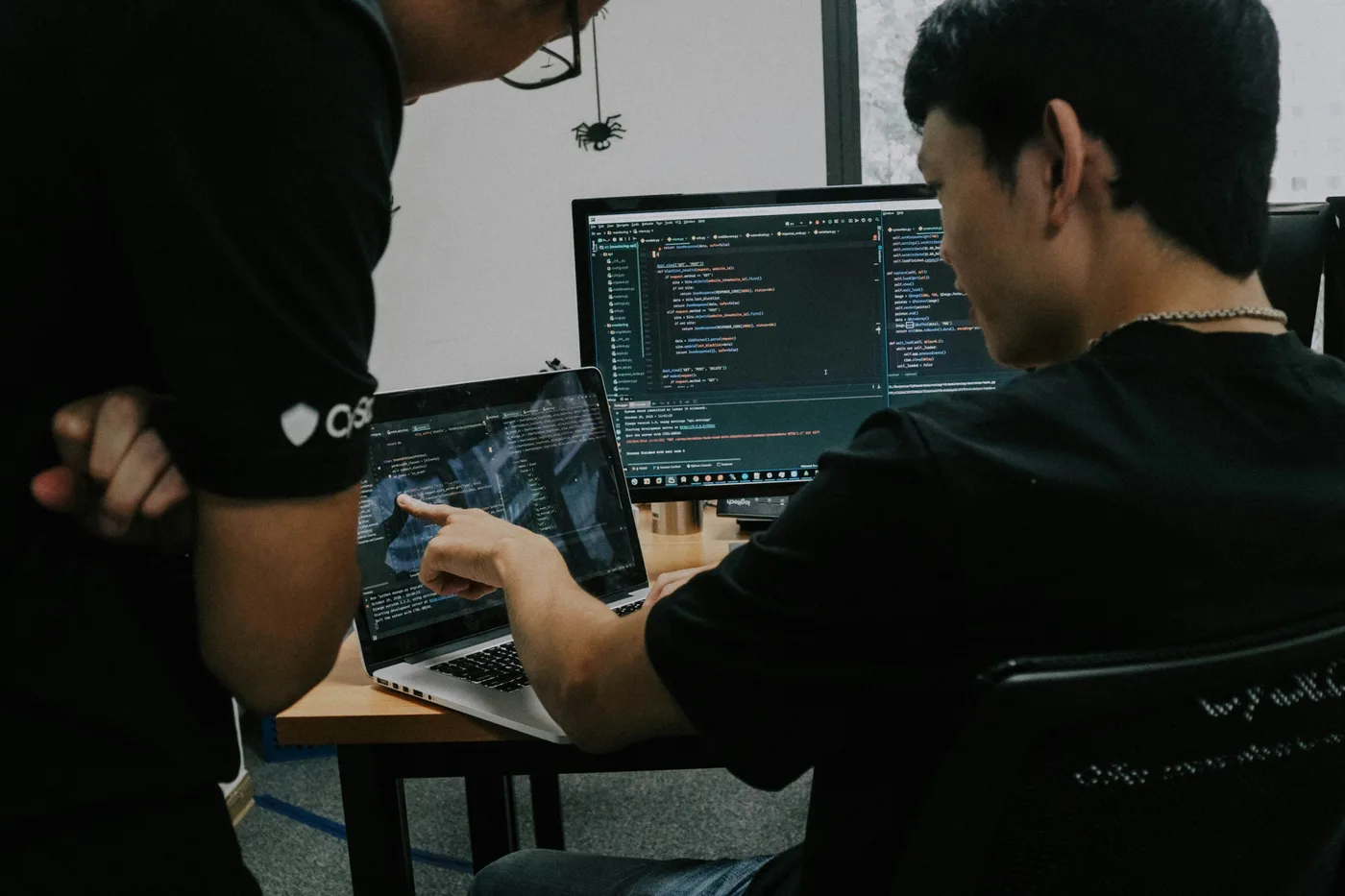
Building for intent: becoming ready for the age of AI agents
Moving from interfaces to intent is a strategic transformation: mindset, architecture, new roles, culture and governance.

The age of intent: from an MCP prototype to organisational change
What a conversational prototype built on MCP reveals about the road from a working demonstration to an organisation that has actually changed.

Start with a two-week audit
A diagnosis of your organisation, the use cases arbitrated on measured value, and a roadmap with the phases and the go/no-go points written down.
Frequently asked questions
One where the critical processes, from code to support and from security to steering, are assisted, accelerated or arbitrated by generative AI, on a shared foundation rather than tool by tool. The distinction that matters is not which model is used: it is whether the whole department relies on it or one pilot squad does.
Because the pilot was chosen to convince rather than to hold. MIT's 2025 research finds 95% of organisations with no measurable business return despite 30 to 40 billion dollars invested. A use case that scales has its value quantified, its input data already available, and a failure the organisation can absorb.
No, and that is decided per request rather than once for the whole programme. The gateway routes according to what the request carries: ordinary internal content can use a cloud provider, sensitive or regulated data goes to a model hosted inside your perimeter. Unclassified data defaults to the strictest level.
By producing the evidence continuously rather than assembling it when the request arrives. Every call is logged with its sources, its model and its version, answers cite where they come from, and the compliance team reaches those logs without going through engineering. Three years of retention is the usual working assumption.
We operate the foundation while it scales, the gateway, the LLMOps pipelines, the security controls and the inference costs. In parallel we build the know-how in your teams, through the Academy, written runbooks and standards, and an internal community of practice. Both run from the first phase, not one after the other.
It should not be, and the architecture is what decides that. No application code names a model: the version is set in the gateway, so changing provider is a configuration change rather than a project across twenty repositories. Models change every few months, and the foundation has to survive that.
With a two-week audit that produces a detailed roadmap, free for organisations with more than ten developers. The framing phase that follows takes 4 to 6 weeks depending on scope, sector and the level of compliance required and produces the arbitrated use cases and the value/feasibility matrix. A first use case in a real environment, with its impact measured, follows in 6 to 10 weeks.